Implant-Supported Dentures in Scottsdale
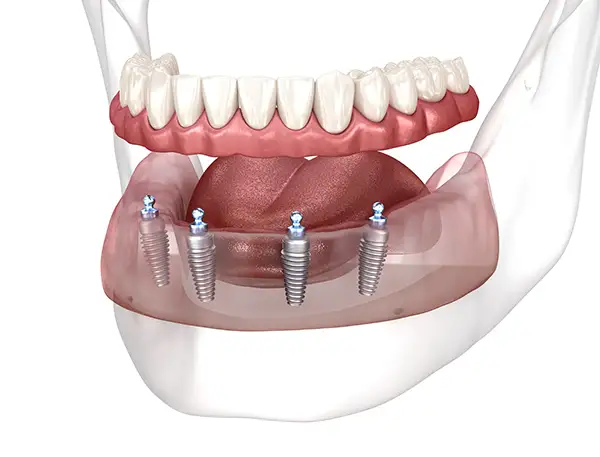 If your dentures slip when you eat or talk, implant-supported dentures in Scottsdale, AZ may be the upgrade you’ve been looking for. At GOREgeous Smiles, we use 2 to 6 dental implants to anchor a removable denture so it stays put through meals and conversation, without the daily adhesive routine. If your dentures slip when you eat or talk, implant-supported dentures in Scottsdale, AZ may be the upgrade you’ve been looking for. At GOREgeous Smiles, we use 2 to 6 dental implants to anchor a removable denture so it stays put through meals and conversation, without the daily adhesive routine.
Implant-supported dentures sit between two more familiar options. They’re far more stable than conventional dentures that rest on the gums, and they cost less than a fixed full-arch alternative where the teeth never come out. For many patients exploring restorative dentistry options, this is the practical middle path.
The concern we hear most often from patients in the Scottsdale area considering this option is whether the implants themselves will work, especially if they’ve been told they don’t have enough bone for implants. That answer depends on your specific situation, and we’ll know within the first consultation. When bone grafting is needed before implant placement, we coordinate with oral surgery specialists so the path forward is clear before you commit.
On This Page
What Are Implant-Supported Dentures?
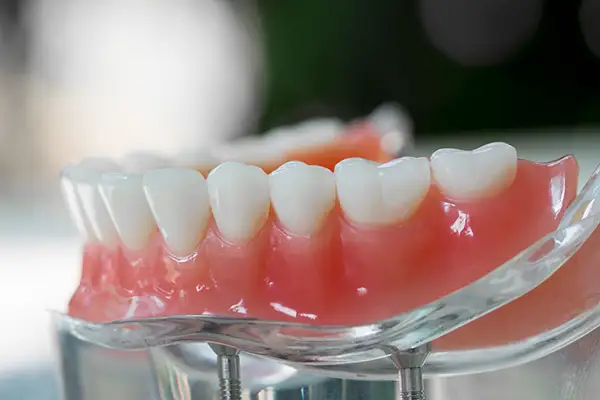 Implant-supported dentures, also called implant-retained dentures, snap-in dentures, or overdentures, are removable dentures that anchor onto small dental implants in your jaw. The implants act like roots that the denture clips, snaps, or locks onto. You take the denture out at night and to clean it, but during the day it stays in place far more securely than a conventional denture ever could. Implant-supported dentures, also called implant-retained dentures, snap-in dentures, or overdentures, are removable dentures that anchor onto small dental implants in your jaw. The implants act like roots that the denture clips, snaps, or locks onto. You take the denture out at night and to clean it, but during the day it stays in place far more securely than a conventional denture ever could.
How Implant-Supported Dentures Work
A standard dental implant is a small titanium post that we place into the jawbone, where it fuses with the bone over several months in a process called osseointegration. With implant-supported dentures, instead of topping each implant with a single crown, we attach a series of connectors to the implants and design the denture to sit down onto those connectors. The denture itself looks like a denture you’d recognize, just with small attachment points hidden underneath where it meets the implants.
Common Configurations
Most implant-supported dentures use one of three basic setups. A lower denture stabilized by 2 implants is the most common entry point, because lower conventional dentures fit poorly for almost everyone – the lower jaw doesn’t have the suction surface area the upper jaw has. A 4-implant lower denture with a connecting bar is more stable and chews better, especially for patients who want closer-to-natural function. An upper denture typically uses 4 to 6 implants, because the upper jaw is harder to anchor stably and benefits from more support. We’ll talk through which setup makes sense for your jaw, your bite, and your budget at the consultation.
How This Differs From Conventional Dentures and Full Fixed Implants
Patients arrive confused about three different options that get mixed together in conversations and online research. Conventional dentures rest on the gums and rely on suction or adhesive to stay in place, which makes them the least expensive option but the least stable. Implant-supported dentures still come out at night but anchor to implants during the day, which solves the slipping problem most denture wearers complain about. Full mouth dental implants take the next step: the teeth stay fixed in place permanently and only your dentist removes them, which feels closest to natural teeth but costs significantly more.
Who Is a Good Candidate
Most patients who currently wear or are about to need dentures are candidates, but two factors matter most. The first is bone volume: the implants need enough healthy jawbone to integrate with, and patients who’ve worn conventional dentures for years have often lost bone height that needs to be evaluated. When grafting is needed, we coordinate with oral surgery specialists so we can plan it ahead of implant placement. The second is overall health: uncontrolled diabetes, certain medications, and heavy smoking all affect implant healing, and we’ll talk honestly about them before moving forward. Many patients in their 70s and 80s do exceptionally well with this procedure.
Your Implant-Supported Denture Doctors in Scottsdale
Dr. Rod W. Gore has practiced in Scottsdale for over 38 years, with a long-standing focus on comprehensive restorative work and full-mouth rehabilitation. That depth matters for implant-supported dentures, because a successful case isn’t just the implant placement or just the denture. The two have to be planned together so the bite balances and the teeth and gums adapt as the implants integrate. Dr. Gore’s bio covers his Doctor of Dental Surgery from Northwestern University in 1987, his AACD Accredited Member status held by only two dentists in Arizona, and his decades of teaching other dentists through the Phoenix Esthetic Study Club he founded in 1998.
The Implant-Supported Denture Process
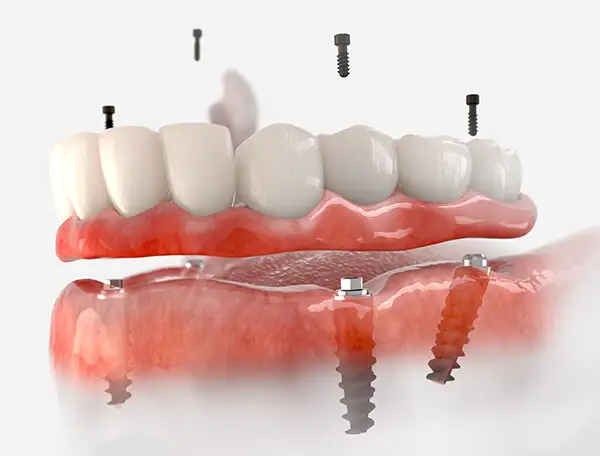 Implant-supported dentures are a staged procedure, not a single appointment. Most cases run 4 to 8 months from start to finish, mostly because the implants need time to fuse with the bone before we connect the final denture. Implant-supported dentures are a staged procedure, not a single appointment. Most cases run 4 to 8 months from start to finish, mostly because the implants need time to fuse with the bone before we connect the final denture.
Consultation and 3D Planning
We start with an exam, a 3D Cone Beam CT scan to evaluate bone volume and quality, and a conversation about what you want this to feel like day to day. The scan tells us exactly where we can place the implants, whether grafting is needed first, and how many implants will work for your jaw. You leave the consultation with a clear treatment plan, a written estimate, and a realistic timeline.
Implant Placement
We place the implants in a single appointment under local anesthesia, with sedation available if you prefer. The number of implants depends on your plan, usually 2 to 4 in a lower jaw or 4 to 6 in an upper. You wear a temporary denture during healing so you’re never without teeth. The placement appointment itself is shorter than most patients expect, and discomfort over the next few days is generally manageable with over-the-counter medication.
Healing and Bone Integration
This is the longest stretch of the process and also the part patients ask about most. The implants need to fuse with your jawbone, and that integration typically takes 3 to 6 months depending on your bone quality, the location of the implants, and how you heal generally. You wear the temporary denture during this time, and we see you for short check-ins along the way to make sure healing is on track.
Final Denture Fabrication and Connection
Once the implants have integrated, we take final impressions, design the permanent denture, and connect the attachments that anchor it to the implants. We fit it, adjust the bite, and make sure it sits comfortably under chewing pressure. From that point forward, you put it in each morning, take it out each night for cleaning, and forget about it during the day.
Benefits of Implant-Supported Dentures
The single biggest change patients describe after switching from conventional dentures to implant-supported ones is that they stop thinking about their teeth. The denture doesn’t shift when you bite into a sandwich. It doesn’t click when you laugh. It doesn’t move when you talk. For people who have spent years working around an unstable lower denture, that alone is the reason they made the change.
The second benefit is bite strength. Conventional dentures restore roughly 25% of natural chewing force, and implant-supported dentures roughly double that. That means foods you have been avoiding, like apples, steak, and corn on the cob, usually come back onto the menu. Patients regularly tell us they’re eating things they hadn’t tried in years.
There’s a long-term oral health benefit too. When you lose teeth and wear conventional dentures, the jawbone underneath continues to shrink because nothing is stimulating it. Implants slow that bone loss because they functionally replace the roots. The lower face stays better supported over time, and the denture doesn’t need to be relined as often as a conventional one.
Finally, no adhesive. The denture clicks into place when you put it in and stays there until you take it out. The morning routine of pastes and creams that conventional denture wearers know well is simply gone.
Why Choose Our Practice for Implant-Supported Dentures
There are two halves to an implant-supported denture case: the surgical placement of the implants, and the prosthetic design of the denture that snaps onto them. We plan the case as one coordinated treatment rather than two separate ones, because how we position the implants shapes how the denture will sit and how the bite will balance. Our office is set up for that planning. We use our dental technology, including 3D Cone Beam CT imaging that shows bone volume in three dimensions before we begin and SprintRay 3D printing for surgical guides and prosthetic design. That precision is the difference between an implant case that integrates predictably and one that runs into surprises.
Dr. Gore’s restorative experience matters here too. Designing a denture that fits well, balances against the opposing teeth, and lasts for years takes the same eye that a successful smile makeover or full-mouth rehabilitation case takes. Many of our implant-supported denture patients are seniors and longtime patients of the practice who have trusted Dr. Gore for years and decided to upgrade from a conventional lower denture they had been fighting with.
What our patients say about working with us:
"I have been a patient of Dr. Gore since 1995 when I moved to the valley. I will be a patient of Dr. Gore until either he stops doing dentistry or I stop needing it. He and his entire staff have take such great care of my family and I over the years. My wife who became significantly disabled in the past few years requires extra care now and Dr. Gore and his team have been amazing with her. They provide superb dental care to her, but more so, they are very compassionate and very understanding of her special needs. Shawna in particular interacts with my wife with the greatest frequency providing frequent dental hygiene. She is very kind and considerate, caring for my wife’s special requirements. You will not go wrong putting your trust in Dr. Gore and his wonderful team."
– Ed C., Google review
"Dr. Rod Gore and every member of his team offer excellence in dental care. Each individual, and the team as a whole, are highly competent and caring. They are sensitive to your needs and really listen, providing a positive, nurturing experience that will promote rapid recovery and healing. I am so appreciative of the quality of care and highly recommend this dental practice."
– Susan R., Google review
"I have had a phobia of needles my whole life and have crippling anxiety over dentists, 5 years ago I went into dr gore’s office and it changed my life. Years down the road, I now have veneers and few root canals and implants, plus his team recognized my bite was off from grinding and gave me TMJ, so they built up my back molars to fix it. The entire team just makes you feel safe and that you are absolutely getting the best best most professional care out there. I cannot recommendation d dr gore and his entire team highly enough. A very grateful patient, Ashleigh"
– Ashleigh F., Google review
More patient feedback on our reviews page.
Implant-Supported Denture Cost and Financing
Cost matters, and we’ll be straight with you. Implant-supported dentures cost more than a conventional denture and less than a fixed full-arch implant solution. The number for your case depends on a few specifics: how many implants you need (a 4-implant bar configuration costs more than a 2-implant snap-on lower), whether bone grafting is part of the plan, the materials in the final denture, and any sedation preferences during the implant placement appointment. We give you a clear written estimate after the consultation and 3D scan, before any work begins.
Most dental insurance plans cover at least part of the implant procedure and the denture itself, though coverage varies widely. Our front office team verifies your benefits with your carrier (we accept Cigna among other major PPO plans) and explains what insurance will and won’t cover before you commit. Our financial and insurance page lists accepted plans and outlines payment options, including out-of-network claim filing assistance.
For patients without dental insurance, the in-office GOREgeous Membership Plan covers preventive care and includes a 20% discount on additional treatments, including implants and dentures. Flexible third-party financing is also available so the cost can fit a monthly budget. Call 480-585-6225 for a personalized estimate.
Schedule Your Consultation
The right implant-supported denture starts with a 3D scan and a real conversation. Call GOREgeous Smiles at 480-585-6225 or use our Request an Appointment page to schedule. We’re located at 8535 E. Hartford Drive #208 in Scottsdale, AZ 85255-5438. You can also reach us through our Contact page with any questions before booking.
Frequently Asked Questions
How is an implant-supported denture different from All-on-4 or fixed full-arch implants?
An implant-supported denture clips or snaps onto the implants, and you remove it at night for cleaning. All-on-4 and similar fixed full-arch implant solutions stay in permanently. Only your dentist takes them out, so you wear them around the clock. Fixed solutions feel closer to natural teeth and cost significantly more; removable implant-supported dentures cost less, clean more easily, and are still dramatically more stable than conventional dentures. Most patients pick the option that fits both their function preference and their budget.
Will I need bone grafting before getting the implants?
Sometimes, yes. Bone shrinks gradually after teeth are lost, and patients who have worn conventional dentures for years often have less bone than they did originally. Whether grafting is needed depends on the 3D Cone Beam scan we take at your consultation. When grafting is part of the plan, we coordinate with oral surgery specialists, and the graft typically heals for a few months before the implants go in. Plenty of patients don’t need any grafting at all, and the scan tells us in the first visit.
How long does the whole process take from start to finish?
Most cases run 4 to 8 months from the consultation to the final denture. The implant placement is one short procedure, but the implants need 3 to 6 months to fuse with your jawbone before we can connect the final denture. If grafting is part of the plan, that adds a few months of healing before we place the implants. We map the entire timeline at the first visit so you know exactly what to plan around.
Will my implant-supported denture slip when I eat or talk?
That’s specifically what implants solve. Conventional dentures slip because nothing anchors them: they rely on suction or adhesive against the gums. Implant-supported dentures click into place over the implants and stay locked down until you take them out. Patients who switch from a conventional lower denture to an implant-supported lower denture usually describe the difference within the first week as the single most useful dental change they have ever had.
How many implants will I need?
Usually 2 to 6, depending on your jaw and the configuration you want. The most common entry-level option is a lower denture stabilized by 2 implants, which works well because the lower jaw is where conventional dentures struggle most. A more stable lower setup uses 4 implants connected by a bar. Upper dentures typically need 4 to 6 implants because the upper jaw doesn’t grip a denture the way the lower ridge does. We walk through the trade-offs of each at your consultation so you can pick the option that fits your function preference and budget.
How long do implant-supported dentures last?
The implants themselves often last decades when they integrate well and you keep up with hygiene visits. A 20-year lifespan for the implants is common, and many last considerably longer. The denture portion that snaps onto the implants wears like any denture and may need to be relined or remade after several years of daily use. The attachment components inside the denture wear faster than the rest and need periodic replacement, usually every 1 to 2 years for the rubber inserts in snap-on systems. We check all of this at your routine visits.
Will I be without teeth while the implants heal?
No. We provide a temporary denture for the integration period, so you have something to wear and chew with throughout the 3 to 6 month healing window. The temporary may not feel exactly like the final denture will, but it bridges the gap so you’re never walking around without teeth. Patients headed into a wedding, a family event, or a work milestone during healing usually appreciate that we plan around those timelines.
Does dental insurance cover implant-supported dentures?
Most plans cover some portion of the implant procedure, the denture itself, or both, though coverage varies widely. The two most useful questions to ask your carrier are whether your plan has a separate annual maximum for major restorative work, and whether your plan covers or excludes implant placement. Our front office handles those calls for you. We accept Cigna among other major PPO plans and file claims for out-of-network plans as a courtesy. |